Showing posts with label Social. Show all posts

(VIDEO) "Strangers No More" - Oscar Winning Movie Trailer

Video Below: Winner of 2011 Oscar for Best Documentary

In the heart of Tel Aviv, there is an exceptional school where children from forty-eight different countries and diverse backgrounds come together to learn.

Many of the students arrive at Bialik-Rogozin School fleeing poverty, political adversity and even genocide. Here, no child is a stranger.

The film follows several students' struggle to acclimate to life in a new land while slowly opening up to share their stories of hardship and tragedy:

- Mohammed, a sixteen-year-old refugee from Darfur, witnessed the killing of his grandmother and father before escaping alone through Egypt to Israel. Having never been in a school before, his sharp mind and tremendous determination enable him to make up the years of study he never had.

- Johannes arrived at Bialik-Rogozin after spending most of his life in refugee camps across the Middle East. His father struggles to obtain a work visa while twelve-year-old Johannes struggles to adjust to attending school for the first time. After a slow start, his teachers realize that he is nearly blind in one eye and take him to an eye clinic. With his new glasses, before long, he is reading and writing -- and helping other newcomers to adjust.

- After the murder of her mother, Esther and her father fled South Africa with nothing, in search of safety and peace of mind. At Bialik-Rogozin, they are welcomed with clothing, food and counsel on beginning a new life. Esther's teachers try to relieve the trauma of a nine-year-old girl who believes her mother will return.

With tremendous effort and dedication, the school provides the support these children need to recover from their past. Together, the bond between teacher and student, and amongst the students themselves, enables them to create new lives in this exceptional community.

Upon graduation, Mohammed provides the finest evidence of the school's ultimate success -- declaring his dream to return to Darfur and build a school for the children of the village he once fled.


(VIDEO) Israelis Helping Abandoned Bedouin Women

So you've all heard how "terribly" Israel treats its Arab population. Here's a video about how Israel treats its Bedouin population.


(SOCIAL) Druze & Bedouin Join ZAKA's Rescue Operations

"Israeli rescue organization ZAKA is now training volunteers from minority communities to be first responders in the wake of tragedy.

For 15 years, Israel's unique voluntary rescue organization, ZAKA, has been sending volunteers to work alongside law enforcement and emergency personnel following acts of terrorism, accidents and natural disasters across the globe.


Now ZAKA is expanding its network within Israel to better serve Arab, Bedouin, Circassian and Druze populations. Two new units in the north and two in the south will be staffed by members of those minority communities, after receiving training that will be adapted to their own religious and ethnic customs.

Until ZAKA (a Hebrew acronym for Disaster Victim Identification) was founded in 1995 by Jerusalemite Yehuda Meshi-Zahav in response to a spate of terrorist attacks, the Jewish state had no organized system for dealing with victims' body parts and blood, considered sacred by Jewish law.

More volunteers means a more perfect world

Fifty-one-year-old Meshi-Zahav tells ISRAEL21c that ZAKA also handles bodies of non-Jewish victims - even terrorists - with sensitivity to cultural and religious principles However, he is eager to have volunteers from Israel's non-Jewish sectors become full participants.

'We believe everyone wants to do good work,' he says. 'Adding as many people as possible to our volunteering circle is a means to perfecting our world.'

Meshi-Zahav was a yeshiva student when he witnessed the first bus bombing just outside Jerusalem in 1989. He and some other students ran to help, but could not offer much assistance without expertise in forensics or first aid. 'I went home and the images kept replaying in my mind like a horror movie,' he recalls.

Over the next six years, he built up the basis for what would become the world's only Jewish organization of its kind.

Today, about 1,500 ZAKA volunteers - including canine, diving, and rappelling specialists - take responsibility for ensuring that all human remains are treated in accordance with religious guidelines. The only organization authorized by the Israeli police to handle recovery and body part identification, ZAKA participates in search-and-rescue missions and firefighting efforts, international disaster relief, and accident-prevention programs.

Government-sponsored training for minorities

Although small ZAKA units are already active among the Bedouin population in the south and the Druze communities of the north, this marks the first time ZAKA's expansion is being sponsored by the government. Galil Ayoob Kara, a Druze member of Israel's parliament and Deputy Minister for the Development of the Negev and Galilee, has termed the arrangement 'holy work' and a critical step toward equality for all Israeli citizens.


Meshi-Zahav looks to the project as a way of breaking barriers and building bridges between Israeli Jews and minorities, which is one of his priorities. 'We are open to all: Religious and not, Jews and non-Jews, Israelis and Arabs,' he says. 'Our guiding principle is our belief that man was made in the image of God.'

An ultra-Orthodox Jew with side curls and a black skullcap, Meshi-Zahav has been present at some grim scenes as a result of his work with ZAKA.

ZAKA assisted at the sites of the World Trade Center and Mumbai terrorist attacks; the Columbia space shuttle tragedy in Texas; the carnage in the wake of Hurricane Katrina; synagogue bombings in Istanbul; the tsunami aftermath in Southeast Asia; plane crashes in Phuket, Thailand, Mexico, and Namibia; the earthquake in Haiti; and a recent murder of a Jewish traveler in the Ukraine, among other tragedies.

The United Nations officially recognized ZAKA as an international humanitarian volunteer organization in 2005.

UN recognition opens doors

'UN recognition is extremely important in our overseas operations,' explains ZAKA spokeswoman Lydia Weitzman. 'That recognition allows us to go into all areas, even countries where Israel does not have diplomatic relations. The humanitarian message of ZAKA is the key that opens doors to all communities.'

ZAKA recently established International Rescue branches in foreign countries including Mexico, France and Hong Kong, with another planned for Kiev to serve Eastern Europe. Community volunteers are to be trained to offer an immediate professional response to a disaster in their region, before Israel-based volunteers can arrive.

The four new Israeli units will begin gearing up this winter. Gadi Kellerman is working with about 15 Bedouins in the south, recruited mostly from among border patrol and police officers. Hezki Farkash is setting up the new Druze units in Beit Jann and Yirka up north.

'In the north and the south, our goal is to keep growing the number of volunteers from the Druze and Bedouin communities,' stresses Meshi-Zahav." (source)


(SOCIAL) Jewish Ethiopians Celebrating Sigd As A Part Of National Heritage

"For Israel's Ethiopian community, the Sigd holiday is one of the most significant of the year. Now it's becoming part of Israel's national tradition too.

At a ceremony at the President's House marking the Ethiopian Sigd holiday, President Shimon Peres marveled at how Ethiopian Jewry has survived not only an environment of assimilation, but also hostility from so many sides.


'This is truly a miracle,' he said, 'and it's not just your festival, it's the festival of the whole of Israel.' Indeed, the Sigd is entering the Israeli psyche as part of the national heritage.

This was the second consecutive year in which the Sigd festival activities were launched at Beit Hanassi and the 10th year in which Sigd was celebrated in Israel. The event coincided with the 25th anniversary of Operation Moses, the cooperative effort of the Mossad, the Israel Air Force and the Israel Navy to covertly transport some 8,000 Ethiopian Jews to Israel.

The holiday, which is also a fast day, is traditionally marked on the 29th day of the Hebrew month of Cheshvan, which is 50 days after Yom Kippur. Unique to the Ethiopian Jewish community, Sigd was first celebrated in Israel by members of the Ethiopian community in the early 1980s.

In February 2008, MK Uri Ariel submitted legislation to the Knesset that would see Sigd established as an Israeli national holiday. The Knesset officially added Sigd to the list of state holidays in July 2008.

The word 'sigd' is Amharic word for 'prostration.' The celebration of the festival in Israel is marked by a fast and a gathering in Jerusalem, during which the Kessim (the Ethiopian religious leaders) read from the Orit (an Amharic version of the Torah). The ritual is followed by the breaking of the fast, dancing, and celebration." (source)


(SOCIAL) Israelis Teaching Gazans To Fish

"Adherents of Economic Peace Theory, graduate students in Israel believe that a fish farm in Gaza may be a stepping-stone to prosperity, and peace between Israelis and Palestinians.

A recent study funded by Israeli billionaire entrepreneur and industrialist Stef Wertheimer found that societies with a GDP over $6,600 per capita do not normally harbor terrorists. Five Israeli graduate students also believe that an entrepreneurial business can lead to a more peaceful world.


To that end, they propose to launch an industrial park in the Gaza Strip. The park that they envision will house an on-land aquaculture or fish farming project, designed to provide a healthy protein supply for Palestinians living in Gaza, relieve economic stress in the Palestinian community, and connect the region to foreign business investment and trade.

The students, a nationally diverse group from Tel Aviv University (TAU), strongly believe that by addressing poverty and the lack of opportunity that leads to terrorism, they will be cutting it off at the source.

There's already international interest. In April, the students' project, which they have dubbed Nets of Peace, reached the finals in New York at the United Nations' 'Spirit Initiative', a business case competition for actionable solutions to long-standing international conflicts.

It was also featured at TEDxTelAviv, a new conference held in Tel Aviv, modeled on the widely respected TEDx conference in Long Beach, California. TED (an acronym for Technology, Entertainment, Design) is a private American non-profit foundation dedicated to 'ideas worth spreading.'

Two of the project's creators are members of the inaugural class of TAU's Sofaer International MBA Program, a curriculum designed to nurture future executives and entrepreneurs who can work knowledgeably and creatively across international borders. Two other team members are graduate students in conflict resolution, and the fifth is earning a Hebrew MBA. The group consists of Israeli, Turkish, Irish and American students.

Fishing for peace

As one of the largest seafood producers in the Middle East, Israel's innovative fish-farming industry is booming. Just a few miles down shore in Gaza, however, where unemployment is said to be as high as 45 percent, fishermen can barely eke out a living.

Still, the fish farming potential in Gaza is significant. The local demand for seafood is high but much of it is currently imported. And the extent of the opportunities for fish farming is not only substantial, the students report, but also increasing rapidly.

As a stepping-stone to a fully developed industrial zone, the students are convinced that the Nets of Peace start-up has the potential to attract investment, create employment, increase prosperity, lead toward economic growth and strengthen the link between Palestinians and the rest of the Mediterranean business community. They are also hopeful that it may increase the possibilities for peace between Israelis and Palestinians.

In the first phase, they envision a number of fish farms, each one providing 200 to 350 jobs, in addition to other temporary work opportunities for construction and installation teams. Technical and professional training and workshops in marketing and sales are also part of the plan.

'Conflict is rooted in these two nations,' one of the students, Israeli Osher Perry, tells ISRAEL21c. 'We need to change the atmosphere of mistrust and frustration. As business students, we are saying let's bring in foreign investment, not offer charity. There are companies with records of success willing to invest in this area to make a profit both for themselves and for the people of Gaza.'

A graduate of the Israel Defense Forces Military Academy and Naval Academy, Perry was Second in Command of the navy's largest ship. Later, as a certified yacht skipper, he circumnavigated the world, gaining a sense of globalization and of world economics before joining the Sofaer International MBA program.


Too busy to turn to terror

The five graduate students 'found commonality in Economic Peace Theory. We felt strongly that reduction in tension would be a product of economic empowerment; that the solution lies within the private sector in Gaza. That being said, it was clear that Gaza has limited natural resources, with the exception of human-power and sea. That fact, coupled with the strong seafaring heritage of the population, along with a drastic reduction in the fishing industry, made fish farms a natural solution,' says David Welch, speaking for the Nets of Peace founders.

Following a 'short but rewarding career in finance,' after obtaining a BA in International Relations from Indiana Wesleyan University, Welch, from Sacramento, California, joined Tel Aviv University's International MA Program in Conflict Resolution.

Welch says that the Nets for Peace project received a green light from Wertheimer to try and revive his vision of a 'New Marshall Plan.' Wertheimer's 'Marshall Plan for the Middle East' is his concept to use industry to provide training, create jobs, alleviate poverty and raise the per capita income of those living in the region, which will keep people busy working, instead of engaging in terrorism. According to Welch, the plan includes a business park, with various revisions to account for current political realities.

Israel's absence from the project is deliberate, and there are no plans for official Israeli partnerships, outside of consulting and liaising with the military and the government to ensure smooth implementation.

Responding to a question from ISRAEL21c about their goal to supply Gazans with 'a healthy protein supply,' Welch says, 'We have come across significant data stating that the population within Gaza (especially the child population) has been lacking essential parts of a healthy diet. The proteins and fatty acids found in fish could be a great way of bridging this gap. Eventually, we would like to see Gaza become a major Mediterranean exporter of fish products, but our first goal is to meet the demand within Gaza itself. We see this as an attainable goal.'

Help Gaza, benefit the global community

Joint international and Palestinian ownership or Palestinian ownership is also a goal and they hope to grant equity to staff. The group is also banking on investment from Palestinian businessman and micro-investment via shares sold to the Palestinian people and note that 'we are also in contact with multiple private sector parties in the Gaza Strip, and are discussing future opportunities with them, but specific names cannot be revealed at this time.'

While it's still in the development stage, the project will be equipped to receive commitments from funders in the near future, and investment opportunities are still available.

'The blueprint of the project does call for private sector partnerships, both internal and external. An educational department is designated to be funded by the international governmental sector, but the rest is to be covered by the private sector,' Welch relates. 'Although no official relationships have been formed, the UN and USAID have expressed interest in the project, and Nets of Peace is a proud member organization of the Clinton Global Initiative,' he adds.

Irishman Dave McGeady is an engineering graduate from Trinity College Dublin. Following completion of his MSc at Helsinki University of Technology he spent several years in investment banking in London before enrolling in the Sofaer IMBA Program and becoming one of the creators of Nets of Peace.

He explains his personal involvement thus: 'I recognize that reducing political tension in this region will benefit the global community.'" (source)


(MED) Israelis Join Komen For The Cure

"Israeli NGOs join the world's largest breast cancer organization to fight breast cancer with a series of events in October.

A week of events in mid October will launch the Israel Breast Cancer Collaborative, a major partnership between Susan G. Komen for the Cure and non-governmental organizations in Israel. The goal is to enhance advocacy, awareness, screening, and treatment of breast cancer.


This inaugural initiative by the world's largest breast cancer organization has been in the planning for more than a year with the City of Jerusalem, Hadassah, the Women's Zionist Organization of America, and Israeli health advocates and scientists.

'In terms of research and development, Israel is in the top five countries in the world - medically way more advanced than any other country,' event coordinator Rena Riger informs ISRAEL21c. 'If it is caught and treated early, the breast cancer survival rate in Israel is 92 percent.'

At the same time, breast cancer in Israel remains the most common form of women's cancers, accounting for nearly 30 percent of all new cancer cases in the country. About 4,000 people are diagnosed with breast cancer in Israel each year, and the age of detection is dropping.

Israelis at higher risk for breast cancer

Riger says that Israel's population, though relatively small, includes both women and men at genetically high risk for the disease due to damaged BRCA genes that ordinarily suppress tumors. These mutations are carried by one out of 400 people in the world, but for Jews of Ashkenazi (Eastern European) descent, it's one out of 40.

Komen awarded its first international research grant to Israel 16 years ago. It has provided nearly $2 million to Israeli institutions including the Weizmann Institute of Science and Hebrew University-Hadassah Hospital in Jerusalem, as well as service organizations such as Beit Natan, a support organization for the ultra-Orthodox community, and Life's Door, which helps with the spiritual, emotional, and interpersonal needs of those facing serious disease.

'We have enjoyed longstanding friendships and productive collaborations in Israel,' says Komen founder and CEO Nancy G. Brinker, a Jewish American who named the organization in memory of her sister Susan.

The Israel Breast Cancer Collaborative aims to continue Komen's long-standing partnerships in Israel and around the world with organizations such as the Jewish Joint Distribution Committee. It also aims to forge new collaborations with organizations including the Israel Cancer Association. The effort is co-chaired by US Sen. Joseph I. Lieberman and his wife, Hadassah, with former Ambassador to the Bahamas Ned L. Siegel and his wife, Komen Advocacy Alliance board member Stephanie Siegel.

Race round the Old City

The centerpiece of the October events will be the first Susan G. Komen Israel Race for the Cure, to take place October 28 around the ancient walls of Jerusalem's Old City.


'Nothing like this has ever been done in Israel,' says Riger. 'We're hoping to get 10,000 people to Jerusalem of all shapes, sizes, colors, and religious denominations.'

Jerusalem Mayor Nir Barkat, a long-distance runner, helped map out the route of the race, which is actually a non-competitive fund-raising and awareness-raising walk. The event will be covered live by Jennifer Griffin of Fox News, a breast cancer survivor who was based in Israel for several years, as well as the Christian Broadcasting Network.

An opener at the Israel Museum's Shrine of the Book - to be bathed in pink light for the occasion - will afford about 50 high-level donor Komen Ambassadors from around the world a chance to meet Israeli 'movers and shakers' such as fashion designer Dorin Frankfurt, the honorary race chairwoman. On October. 27, US Ambassador James B. Cunningham and his wife will welcome delegates and sponsors at their home.

'Still far more work to do'

'Komen is providing opportunities to participate in this historic trip as a delegate at several levels,' Riger relates. Partner organizations in North America and Great Britain are recruiting participants along with Hadassah, the women's Zionist organization. 'With our Virtual Israel Participant [VIP] program, you can contribute to sponsor a runner or contribute generally if you are unable to attend.'

'From our decades of work in Israel and in our outreach in other countries, we know that there is far more work to do to address this critical threat to women's health,' says Hadassah president Nancy Falchuk. 'We are looking forward to adding the energy of 300,000 Hadassah members worldwide behind this important and life-saving effort.'

As part of the October 25-29 initiative, an invitation-only think tank on early detection is to convene at the Weizmann Institute. About a dozen Israeli and global experts are charged with exploring new screening methods for women's cancers and issuing a white paper concerning a major research project.

A variety of national women's and health organizations are also participating. For example, Beit Natan will sponsor a Day of Women's Health at Jerusalem's National Convention Center for its target population. In addition, the international Hillel: The Foundation for Jewish Campus Life will run programs for students on women's health.

To register as an actual or virtual participant or to donate to the Israel effort, go to komen.org/Israel." (source)


(SOCIAL) Jerusalem To Get New Skateboard Park

"'Jerusalem will be joining leading cities around the world with a modern and professional skate park that will attract many visitors,' Jerusalem Mayor Nir Barkat announced recently.
The state-of-the-art skateboard park, to span 0.7 acres at an investment of about $1.3 million, is to open in the capital by the end of next year in Jerusalem's Liberty Bell Park.

The idea originated with a group of Jerusalem teens, who met with representatives of the city's sports authority and for about eight months protested the lack of world-class skateboarding facilities in the capital, until the mayor decided to grant their request.

According to plans, the new park will serve up to 70 skaters at once, and will be suitable for national and international competitions." (source)


(SOCIAL) “72 Hour Urban Action” Takes Over Bat Yam, Israel

"Teams have 72 hours to re-design an urban area in a pretty crumby satellite city in Israel. It’s guerilla urban architecture.

We’ve all had the same thought: it’s been built, we’re stuck with it. This ugly urban mess we have created is here to stay and there’s nothing we can do about it; may as well put up our feet, grab a lager, and watch re-runs of 'The Days of Our Lives' to wile away the misery. Others challenge that notion, and show the rest of us couch-potatoes that actually we have an extraordinary capacity for innovation and have the necessary power to reverse our unsustainable trends. And not only can we fix our mistakes during this lifetime (instead of leaving it for our kids to deal with), we can make serious headway over a weekend. They started with the 72 Hour Urban Action Program in Israel’s less-than-glamorous Bat Yam.

'Bat Yam is almost entirely built, and has no other choice but to re-examine its already existing urban fabric,' Kerem Halbrecht, the Israeli architect who dreamed up the Urban Action, told the New York Times Magazine. 'I wanted to challenge the common perception that creating change in public space is long and difficult, and to see if public space can respond to changing needs in real time.'"


(SOCIAL) Israelis Grasping The Real Challenges Of The Global Village

"As requests for Israeli know-how multiply across the globe, Haim Divon, head of MASHAV, Israel's Center for International Cooperation, strives to supply specific solutions.

Career diplomat Haim Divon found his calling in the pages of the National Geographic magazines his parents encouraged him to read when he was a boy. But he could not have known then that his yearning to visit exotic places would so successfully dovetail with the mission of MASHAV, the Center for International Cooperation, that he now heads as deputy director-general of Israel's Ministry of Foreign Affairs.


MASHAV was founded in 1958 as a vehicle for sharing Israel's creative solutions with the rest of the developing world. At the time, Divon was just eight years old and his Jerusalem family was still feeling the pinch of nationwide austerity rationing.

'I heard [first Israeli Prime Minister David] Ben-Gurion talking about our moral obligation to share with others at a time when we had no food and had to absorb more people than our actual population,' says Divon. 'He was a pragmatist but also a philosopher. That is where I come from.'

Training for 200,000

MASHAV has long focused on the same objectives that the United Nations recently formalized as its priority development goals: Poverty alleviation; food security; sustainable development; empowerment of women; child and maternal health; social equity; environmental sustainability; and upgraded public health and education systems.

MASHAV professionals have trained some 200,000 people from approximately 140 countries, including Israel. In countries across the world, they have developed dozens of demonstration projects in fields of Israeli expertise.

Divon came to MASHAV in 1995, after serving in diplomatic postings in Bombay, Ethiopia and Sri Lanka.

'It was more than eye-opening to see what was happening out there,' he says. 'What hits you is the real meaning of poverty and human suffering. In the western hemisphere we live in a bubble and we don't grasp the real challenges of this global village of ours, which is getting smaller.'

Concentrating on key 'agents of change'

After serving as Israel's ambassador to Canada, Divon returned to MASHAV in 2005. His current objective is orienting the staff to offer need-specific solutions on demand. The standardized programs in which the agency had invested so much money and expertise over the past 50 years generated plenty of good will toward Israel but were difficult to quantify in terms of lasting effect.

'By coordinating better with our partner countries and with third parties, we have a better chance to succeed,' says Divon, who also is CEO of a government company, Igud, that provides MASHAV a platform to run extension centers in Israel and recruit Israeli experts who form its permanent nucleus.


Among MASHAV's current projects are helping the mayor of Kisumu, Kenya's third largest city, to establish a strategic planning unit to empower periphery cities and training Ethiopia's head agronomist in biotech and irrigation methods, to enhance yields at a mango and avocado nursery that it established in that African nation. 'They must boost their quality and diversity for local consumption, and exports must meet certain standards. We can show them how,' Divon declares.

MASHAV has a long history of dispatching medical aid around the world. A recent example was a delegation of six doctors from Sheba Medical Center that was sent to the Democratic Republic of Congo following a July 2 fuel tanker explosion that injured some 200 people. Also this year, MASHAV facilitated the creation of neonatal and intensive care units at hospitals in Ghana and Kenya and a new ICU for the hospital in Port Au Prince, Haiti is underway.

However, whenever possible the preferable approach is to bring key 'change agents' from beneficiary countries to Israel to see programs in action and hear from experts on the ground. This summer, for instance, MASHAV hosted a contingent of educators from Moscow for pedagogic training.

Focus on contributions, not conflict

Beyond practical solutions, MASHAV also strives to pass along the can-do spirit that visitors invariably marvel at. This spirit is personified in the multilingual Divon himself, his New York-born wife, Linda, and their three grown children. In their frequent and extensive travels, members of the Divon family have initiated and participated in projects such as a Canadian 'peace camp' for Israeli and Palestinian children.

Divon's many aspirations for MASHAV are not easy to achieve on a total budget of about $20 million - an amount the Minister for Foreign Affairs would like to triple. Demands for Israeli know-how continue to grow, especially now that Israel is a member of the Organization for Economic Cooperation and Development.

He hopes that one day the high level of appreciation for Israeli aid that emanates from developing countries will be matched in the rest of the world. That can only happen, he believes, when the media pays as much attention to Israel's contributions as to its conflicts.

'Imagine how people would look up to Israel if every activity in every country we are involved in would get front-page headlines,' he concludes." (source)


(SOCIAL) Surf's Up: Israel's Top 10 Surfing Beaches

"With 186 miles of sandy beaches, and a sea that is virtually free of seaweed and sharks, Israel is a great spot for surfers, say the country's experts. ISRAEL21c picks the top 10 beaches.

Israel has a stretch of sandy beaches extending for about 186 miles, and a sea that is virtually seaweed- and shark-free. While conditions may not be up to scratch for pro surfers, local experts say it's a great spot for beginners and laid-back surfers.


'The water's warm, there are no strange animals and you only have to worry about two weeks of jellyfish in July,' says Nir Almog, known to many as the father of Israeli surfing. 'We've got soft, weak waves and you can surf absolutely anywhere. You can't find that everywhere in the world.'

What's more, there's summer as well as ample winter surfing, thanks to the relatively mild Israeli weather conditions in the country's center, which is where most of the surfing beaches are located. The waves are actually higher during the winter following heavy rainstorms, and that's when the surfing swells show up, Almog tells ISRAEL21c.

During the summer, the water temperature in the Mediterranean can be as high as 28 to 29 degrees Celsius, while the winter waters cool down to some 14 degrees. Wave height also varies, with summer waves ranging from about one and a half, to three feet on medium surfing days, while mornings consistently offer the best swells, with waves 'breaking long and perfect,' according to Almog. Fall and winter swells can reach from six to 10 feet, which is the time for the more experienced Israeli surfers to hit the waves.

Almog should know. It was his father, Shamai 'Topsi' Kanzapolski, a Tel Aviv lifeguard, who was recruited by Dorian 'Doc' Paskowitz, a California doctor who came to Israel in the 1950s, hoping to create Israeli surfing champions. Paskowitz brought six long boards made partially from balsa wood, each depicting the blue-and-white national flag.

At the time, Israeli lifeguards were catching the waves with the Hasake, a flat, wide board that had initially been used for near-shore fishing by Arab fishermen. Slowly, as the lifeguards and other locals began to use Paskowitz's offerings, a surfing tradition was born, with Almog riding along on his father's board.

At the time, the waves on Tel Aviv's beaches were very high and would break right on the beach due to a lack of piers, creating a fairly dangerous setting for surfing.

Increased development along the beachfront helped to create safer conditions, and now Tel Aviv locals 'can stay put on their own shores' for decent surfing, says Almog, who can be found riding the waves when he's not in one of his two Intersurf stores. But there's surfing to be had in all the major beach towns and cities, from Tel Aviv and Herzliya to Haifa, Netanya, Ashkelon and even in Gaza.

1. Hilton beach, Tel Aviv

In Tel Aviv, locals are fond of the two Hilton beaches, named for the hotel that towers above this particular stretch of sand. With two jetties that protect the waves from incoming currents, the beach offers one of the best reef breaks in Israel. The reef can hold swells ranging from one to seven feet and while the waves start off weak, they strengthen closer to shore. The Hilton Bet shore, also known as Topsy, is a break directly north of the Hilton that is similar in makeup to the other Hilton beach, but with a slightly different reef that tends to be less crowded. According to local surfers, the break often performs better in small to medium swell conditions. Former Israeli skateboard champion and surfer Arthur Rashkovan grew up on the Hilton Beach, in what he calls a 'mini-California, surfer's paradise.'

2. Maravi Beach, Tel Aviv

If you're surfing in Tel Aviv, try the Maravi Beach, which means Western Beach and is in fact the city's southernmost beach, situated between Tel Aviv and Jaffa. Surfers like it during the summer, when there are numerous short boarders, long boarders and body boarders, and, according to a local blog, 'everybody is really mellow, no localism to worry about.' A structure fashioned of cement and stone poles that juts out of the water forms a manmade reef where waves break left and right, offering even better forms than the beach breaks of Herzliya.

3. Dophinarium Beach, Tel Aviv

Tel Aviv's Dolphinarium Beach, named for an old dolphin tank that is now used as a nightclub (that was the site of a suicide bombing in 2001), offers reasonably consistent surf during the summer months, but even better conditions in the winter. Also known as the drummers' beach for the drummers, free-style dancers and jugglers who gather there late on Friday afternoons, you can also rent surfing, windsurfing and para-surfing equipment at the water sports club located on this beach. With offshore winds from the southeast, wind swells are more typical than groundswells and there are great waves from the northwest with good surf during all stages of the tide.

4. Zvulun and Dabush beaches, Herzliya

Take a ride over to Herzliya where a selection of beaches offers decent surfing in winter and summer. Almog likes Zvulun and Dabush beaches, which offer good surfing early in the morning when there's a southern wind. Dabush is north of Herzliya's third sea break, while Zvulun is north of Dabush. Zvulun offers slightly longer rides than Dabush with larger waves and a sandy beach. For Almog, the favorite Herzliya beach is south of the Herzliya marina, known as Marina Beach and home to the yacht crowd. As the city's southernmost beach, it sits between the marina and the first of the three Herzliya wave breaks, and the waves that come in are perfect to ride. 'It works the best when there are northern winds,' says Almog, particularly on early winter mornings, at around five a.m., when all is silent except for the sound of the waves.


5. Kontiki and Sironit beaches, Netanya

Just up the coast a bit are the nine miles of Netanya beaches that don't receive the highest marks from surfer dudes, but have 'okay waves for surfing,' according to Almog. Look for Kontiki and Sironit beaches which are connected to the piers, offering decent waves. However, since the 'sand moves all the time,' on this open beach, it's considered a fickle surf spot for many. At the same time, Netanya Beach is a major site for sailing, diving and snorkeling, and there's ample opportunity to paraglide and parachute off the Netanya cliffs.

6. Beit Yannai Beach, Netanya

Just north of Netanya is a beautiful stretch of beaches connected to the Alexander Stream. Home to famed, giant soft-shell turtles, the banks of the stream are adjacent to the shifting sand dunes and a eucalyptus grove. The beach, where the stream meets the Mediterranean, is home to Israeli parachute surfers, where the wooden posts of what was once a pier, stand out against the waves. Local legend has it that the pier was used before the establishment of the state to land illegal immigrants arriving in defiance of British Mandatory restrictions, but Dudi Shani, director of the national park that contains the beach, says the story is untrue. There are always a few surfers in these waters, and it is the first beach in Israel designated exclusively for kite surfing.

7. Shonit, Sdot Yam beaches, Caesaria

Almog doesn't weigh in on surfing in the town of Caesarea, but surf blogger Tzachi Paz has only glowing reviews for his childhood surf spot. Growing up on the beach between Caesarea and Givat Olga, Paz divides the Caesarea strip of beachfront into three major spots. He describes the Shonit Beach as a great beach for surfers, with rocks at a depth of about 328 feet and another point that sometimes creates a deep, long wave that long boarders like to use. Sdot Yam, another well-known beach in the area has great waves during winter storms, creating walls of waves for surfers.

8. Arubot Beach, Caesaria

The best spot for surfing in Caesaria is Arubot Beach, about a quarter of a mile to the south of Shonit. Located next to major wind turbines, surfers ignore the 'Do Not Enter' signs and make their way down to the beach. According to Paz, there's a myth that the waves only work during winter storms - and many surfers flock there during the winter. But it's also great during the summer, when the waves are perfect and there are few other surfers. Paz describes these waves as the types that are 'long, open, start out flat and become a step and wall as you approach the beach.'

9. Bat Galim beach, Haifa

Farther north brings you to the Haifa Bay, where the Backdoor and Casino surf spots are located on the Bat Galim (Daughter of Waves) Beach on the southern tip of the bay. They're considered to be very good beaches, particularly in the winter when the storms have strong southwest winds offshore. Protected by two jetties, Backdoor is considered Israel's best reef break, as it is covered with moss that feels soft when it rubs against surfing bodies. With a hollow right wave, it has gained the reputation for the best tube-riding wave in the country. A little further down is Casino, an open ocean break that lacks jetties but provides a great long boarding wave. As a 'split peak' - which means that you can ride both lefts and rights, the wave is at least one foot bigger then Backdoor when it's 'firing.'

10. Goote, Delilah beaches, Ashkelon

While Ashkelon has been a surfers' spot for some time, it's a newer beach destination. Goote Beach is the best surf spot in this southern beach town, with jetties around the marina that make the waves smaller, and a break just south of the marina that holds great waves during winter storms. With waves higher the farther south you head in Israel, Herzliya will have knee-high waves while Ashkelon will have waist- to chest-high waves. According to Grant Shilling, writing about surfing for This Magazine, Delilah Beach in Ashkelon, named after the biblical story of Samson and Delilah, said to have taken place on this spot, is another popular surfing beach. But surfing in Ashkelon has been affected by the rockets launched from Gaza, an ironic turn of events given that surfing lingo for catching a big wave is 'riding a bomb.'" (source)


(SOCIAL) Perfect Harmony At The Abu Gosh Music Festival

"The Abu Gosh Vocal Music Festival, with top musicians performing in acoustically superior venues, strikes a chord among all Israelis - Jewish, Muslim and Christian.

For the past 19 years Gershon Cohen has directed and produced Israel's one and only vocal festival, the Abu Gosh Vocal Music Festival.


It is important to Cohen that the festival takes place in the Muslim Arab village of Abu Gosh, which boasts some of the best acoustic venues in the country - located in the crypt of the Crusader Church, the Benedictine Monastery, and the Kiryat Ye'arim Church.

But it isn't just the venues that attracted him to the Arab Muslim village. 'I wanted to do something in a Muslim village, and this is a Muslim village with Christian churches, and attendees are Muslim and Christian Arabs and Jews. You can't ask for a better pluralism,' he tells ISRAEL21c.

Cohen, 70, from the nearby town of Sho'eva, revived the festival, which began in the 1950s, but had died out by 1969. 'I fell in love with the music and decided to start up the festival again,' he says. 'This is the only vocal festival in Israel and it is really very beautiful.'

Abundance of local talent

Twice each year, at Sukkot and Shavuot, more than 8,000 vocal music fans from Eilat in the south to Metulla in the north, and from across Europe, descend on the pastoral town of Abu Gosh, on the outskirts of Jerusalem, to hear sweet songs of all sorts, from Mozart to Irish folk.

The upcoming festival will include some non-Israelis, as well. Among the 16 indoor concerts that will take place throughout the four-day event from September 29 to October 2, are two concerts by vocal ensemble Voces8, from London, England, and three concerts featuring the Kammerphilharmonie-Hessen chamber orchestra, from Essen, Germany.

According to Cohen, there is so much local talent that it's rare for the festival to host more than one international guest, despite the fact that they receive several requests for participation from ensembles and orchestras abroad.

'There are very good orchestras in Israel and so there is no need to bring them from abroad,' Cohen says, mentioning the Rishon LeZion Symphony Orchestra, the Ra'anana Symphonette Orchestra, the Jerusalem Symphony Orchestra, and the Israel Philharmonic Orchestra. 'We have a lot of excellent musicians in Israel. The competition here is very high.'


Cohen attributes this abundance of musical talent to the flood of Russian immigration to Israel in the early '90s. 'They brought a lot of musicians and this was very good,' says Cohen. 'It's a big part of their culture and we are very happy about that.'

Israelis love music

Attendees have come to rely on the familiar structure and talent that appears at the festival and Cohen likes it that way. 'We're really not looking for 'different',' he says. 'This makes it nice because the audience knows what to expect.'

While many of the festival's musicians and audience members remain the same, the event's repertoire changes with each festival. This Sukkot, the festival will open with Brahms' German Requiem, conducted by Hanna Tzur, the festival's long-time musical director. Other concerts on the roster include sacred French music and chansons; a Balkan festival; songs of great American folk singers; a Baroque hit parade; Irish folk songs; and a concerto and mass of J.S. Bach's Cantata.

Besides the 16 ticketed indoor concerts, the festival will also feature more than 20 outdoor performances at five different locations around Abu Gosh. These include opera singing with Israeli Opera pianist Eitan Shmeisser, concerts by accordion virtuoso Emil Aibinder, among various other performances by Israeli folk singers, choirs, and small chamber groups. The event will also feature a wine tasting pavilion and a small bazaar, hosting local artisans.

Cohen says that these are just extra charms. The reason why attendees keep coming back, season after season, is the music. 'All music is very popular in Israel - jazz, pop, classical, you name it. Israelis love music, and this music has a particularly loyal following.'" (source)


(ARTS) Israel's B-Boys And Girls

"It's hot, it's hip, and it's breaking loose on Israel's streets, Israel's break dancing scene in now on the international map.

Dvir Rozen, director of the Israel Break Dance Association and CEO of his own company, Street Art Productions (SAP) says that Israel is 'getting there, we're getting in the level of the big boys abroad - the USA guys and the Europe guys.'

It all began in 1999 when Dvir rolled back the carpet and pushed away the furniture in his living room and set about memorizing and copying the moves on the classic Run DMC 1998 break dance video. He recalls holding his first event, which drew 10 people, and how each event attracted more until hundreds were arriving at his break dance gatherings in Tel Aviv shopping malls.

Dvir started the two organizations to train more B-boys and B-girls, as the break dancers refer to themselves. He holds classes and workshops and organizes shows, all of which culminate in the main annual event - the qualifying finals for Battle of the Year International, which is held in Germany in November.

Crews from all over Israel compete, with names like 'Kosher Flavor.' As has been the case for the past three years, the Unstoppables won this time and will represent Israel in Germany.

Rozen has also founded HipHop for peace and hopes to collaborate with the Camp Breakerz, a break dance group in the Gaza Strip, and bring them to Israel for the next Battle of the Year. He has high hopes to continue developing the scene and skills of the dancers and says he hopes 'to bring more respect to Israel B-boying.'" (source)


Palestine VS Israel


(SOCIAL) Israelis, Palestinians Tackle Issues On Football Field

"The Judean Rebels is the first West Bank franchise in Israel’s amateur American tackle football league.

In one of the Middle East’s key flashpoints, a group of Israelis and Palestinians are putting aside their differences and teaming up on the sports field to chase a common goal.

The Judean Rebels is the first West Bank franchise in Israel’s amateur American tackle football league, the Kraft Family IFL. Most of the players are Jewish Israelis, many of them West Bank settlers, but five are Palestinian."


(SOCIAL) ‘Pirate Ship’ Of Social Change Makes Landfall In Tel Aviv

"'The amount of people per capita that have that entrepreneurial drive is higher here than anywhere else'.

When seven nice Jewish boys from America are traveling around the world trying to connect hip, young entrepreneurs, it’s inevitable that they’ll come to Israel sooner or later.

The seven leaders of Summit Series, creators of a series of conferences where they throw staid, buttoned-up networking out the window and get CEOs to do yoga together, arrived in Israel in July."


(SOCIAL) Israeli Nobel Prize Winners

Since the establishment of the State of Israel, seven Israelis have won the Nobel Prize. The most prestigious award in the world, this prize is named after the Swedish inventor Alfred Nobel and distributed each year to select individuals for their contribution to humanity and achievements in the fields of physics, chemistry, economics, medicine or physiology, literature and peace. Below is a list of the Israeli winners.

1966 S.Y. Agnon – The first to fill our hearts with Nobel pride
In 1966 S.Y. Agnon won the Nobel Prize for Literature. He wrote in rich, matchless Hebrew, mainly about the Jewish world. During his lifetime he published dozens of books and stories that gained admiration and even tremendous commercial success, including “Shira,” “Only Yesterday,” “A Simple Story” and others. His prize was shared with Jewish poet Nelly Sachs.


1978 Menachem Begin wins the Nobel Peace Prize
The first Likud Party Israeli prime minister, Menachem Begin z”l, was the first Israeli politician to win the Nobel Prize for Peace, along with Egyptian President Anwar Sadat, after signing the peace agreement between Israel and Egypt.

1994 Yitzhak Rabin and Shimon Peres win the Nobel Peace Prize
For their efforts and activities to promote peace in the Middle East, former Prime Minister Yitzhak Rabin z”l and current President of the State of Israel Shimon Peres received the Nobel Prize for Peace.

2002 Prof. Daniel Kahneman proves that “wealth is not happiness” and becomes the first Israeli Nobel Laureate in Economics
The first Israel recipient of the Nobel Prize in Economics was Prof. Daniel Kahneman, a psychologist who won the prize in 2002 along with an American, Vernon Smith. The prize was awarded for integrating psychology research into economics, pertaining to processes of judgment and decision-making under conditions of uncertainty. Kahneman discovered in his research that very rich people with immediate access to all the good things that money can buy are no happier than people of average means. It turns out that above a certain poverty line, human happiness is not a function of material wealth…

2004 The Nobel Prize in Chemistry was awarded to Technion researchers Avram Hershko and Aaron Ciechanover for the “kiss of death” for proteins
Two years after Kahneman, a pair of Israelis,Avram Hershko and Aaron Ciechanover, from the Technion in Haifa, won the Nobel Prize in Chemistry. Together they discovered the “death tag” for proteins, a molecule that sticks to damaged proteins or those whose time is up, and signals to the cell to destroy them. This is how the human body creates proteins to defend itself against infections. The prize committee wrote in its decision: “When the system does not work properly, we become sick: cervical cancer and cystic fibrosis are two examples of this. The three men’s work helped develop medicines that can cope with such situations.”


2005 Yisrael Aumann’s Game Theory leads Israel to another Nobel Prize in Economics
In 2005, Yisrael Robert Aumann won the Nobel Prize in Economics (along with Thomas Schelling) for his research in the realm of Game Theory. Among the reasons for bestowing the prize on him, it was said that greater understanding of the term ‘human rationality’ was achieved, and that thanks to the research, behaviors that were previously considered irrational have now been given a rational explanation

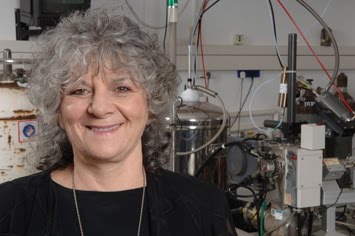
2009 Prof. Ada Yonath, the first Israeli woman to win a Nobel Prize
Israeli scientist Prof. Ada Yonath, a prominent researcher in the field of structured biology, was the first woman to win a Nobel Prize in Chemistry since 1964. The research by Yonath, focused on the structure of the ribosome, the organelle in a cell that serves as a “protein factory” and translates the genetic code into protein production.

Not only from Israel: 22% of all Nobel Prize winners are Jewish
The number of Jews in the world is about 14 million, comprising some 0.2% of the world’s population. The list of Jews or their descendents who have won the Nobel Prize (as of the end of 2009) numbers 176 out of 804 (not including institutions), which comes to 22% of all Nobel Prize winners.
Here is a breakdown of the Jewish winners according to topic:

  • Physiology and Medicine: 51 Jewish Nobel Prize winners out of 195 = 26.1%.
  • Physics: 47 Jewish Nobel Prize winners out of 186 total = 25.3%.
  • Economics: 26 Jewish Nobel Prize winners out of 64 total = 40.1%.
  • Chemistry: 30 Jewish Nobel Prize winners out of 156 total = 19.2%.
  • Literature: 13 Jewish Nobel Prize winners out of 106 total = 12.3%.
  • Peace: 9 Nobel Prize winners out of 97 total (not including institutions) = 9.3%.
(source)


(SOCIAL) Children Who Play Together, Learn To Live Together

"In a precedent-setting accomplishment, PeacePlayers Middle East is entering four Jewish-Arab teams in the Israel National Basketball League.

If Halid and David had not joined the PeacePlayers basketball program in 2005, they probably wouldn't have met - at least, not under good circumstances.


David, a Jewish teen, immigrated alone to Israel from Ethiopia at age 12. Halid comes from a poor Arab village where people are mistrustful of Jews. But they got to know each other when their teams came together for activities, and later they both joined an integrated league team. Now completing a coaching certification program together, the boys volunteer with younger players and in social action projects in their communities.

'They help each other,' says Karen Doubilet, managing director of PeacePlayers International - Middle East (PPI-ME). 'Halid is an amazing role model for his community. And David, who was at first shy and suffered from low self-esteem, is a young leader now,' she tells ISRAEL21c.

This year, PPI-ME will enter four integrated teams in the Israel National Basketball League, two in Jaffa and two in Jerusalem. The Jerusalem teams will be the first to feature players from both East and West Jerusalem. 'We are so proud of this precedent-setting accomplishment,' Doubilet reports.

Uniting and educating through basketball

PeacePlayers International was founded in 2001 by Sean Tuohey and his brother Brendan, on the premise that 'children who play together can learn to live together.' The global non-profit organization uses basketball to unite children and develop leaders in conflict and post-conflict regions. PPI runs programs in Northern Ireland, Cyprus, South Africa, and New Orleans, where its initiative was recently handed over to a local partner.

In Israel, the locally led charity aims to unite and educate Jewish and Arab youth and their communities through basketball. Its curriculum, developed in partnership with the Arbinger Institute, a US-based consultancy, combines on-court experiential learning with open dialogue.

More than 300 children were registered in PPI-ME programs last year. 'In our new year we should have about 750 kids,' says Doubilet. The children come primarily from East and West Jerusalem, Beit Shemesh (in the Jerusalem district) and environs, and Jaffa. 'We work with schools, community centers, and sports clubs to recruit children, and in smaller villages we use word of mouth.'

The program targets ethnically and religiously diverse populations, including Ethiopian, Russian, and American immigrants, and works toward gender equality through sports in both Jewish and Arab communities. A single-identity, capacity-building program in the West Bank provides another outlet for underprivileged children and an additional training opportunity for Arab coaches.


Achieving color-blindness

'PPI is a long-term program for ages 10 to 15, so you see them developing as teammates and friends,' says Doubilet, a Toronto native with a background in conflict resolution and experience with the Peres Center for Peace. 'At the start it's awkward and there's a language barrier, and some kids have never met the 'other side' before. As they become better players and a more integrated team, they become better friends and many friend each other on Facebook.'

Later on, she continues, the kids are eager to meet with the 'other side' and tour communities they've never ventured into previously. 'At one point, you see a 'color blindness' has developed. There is quite a difference from beginning to end.'

When the organization runs a 'fun day' to introduce the free program, usually more children want to register than there are places to accommodate them.

'Our local staff members are key,' relates Doubilet. 'We utilize American post-collegiate scholar/athletes who serve as 'neutralizers' and work with local coaches and program managers to build excitement. The initial draw isn't about meeting with the 'other side,' but about fun and basketball.'

Peace education and life skills combined

She admits that parents sometimes need a bit of persuasion to give their permission, 'but I've never seen it really getting in the way. Parents are less reluctant to have their kids participate locally than if they go on one of our retreats or trips. In those circumstances, they have to be reassured that there are always people from their community there in addition to me, whether a local coach or siblings. I also invite them to speak with other parents whose kids have participated before.'

Doubilet explains that basketball, Israel's second most popular sport behind soccer, is a particularly intimate sport because just five players are on the court during a game. Therefore, players understand that communication among them is essential.

Children are required to participate at least twice a week, and may come as often as five times per week. Some kids are involved in more than one PPI initiative. There are twinned basketball clubs for Arab and Jewish children ages six to15, which offer joint peace education and life skills activities and also afford the opportunity to compete on integrated teams of the Jerusalem Peace League and the Jerusalem Girls Basketball League.

Another project is a leadership development program for outstanding 16-year-old participants. There is also professional development and conflict management training for future basketball coaches, intergroup facilitators, educators, and leaders such as Halid and David.

The costs of the programs are borne by donors including US-AID, Adidas, Laureus Sport for Good Foundation, family foundations, and a grant from the US State Department." (source)


(ENVIRO) Jewish Charity UJIA Goes Green In London

"One of the biggest Jewish charities in the UK has adopted a green policy to reduce its environmental footprint. The United Jewish Israel Appeal (UJIA) decided that moving to new offices in north London last year was the perfect opportunity to examine how the organisation could reduce its environmental impact. This initiative could have a knock-on effect around the world – even the Middle East.

“Being environmentally responsible runs through everything we do at UJIA. Since moving into our new Camden offices, we have been putting our green principles into practise,” explains David Janner-Klausner, UJIA’s programme and planning director (pictured above, left, alongside UJIA chief executive, Douglas Krikler)."


(SOCIAL) Lawyer Launches Special-Needs Partnership In Israel

"Jay Ruderman is looking to integrate people with special needs into Israeli society.

With a $2 million gift from his family foundation, $2 million from the New York-based American Jewish Joint Distribution Committee and $2 million from the Israeli government, the former lawyer and lobbyist has launched Israel Unlimited, a three-year partnership aimed at helping people with special needs in Israel. 'I want people with disabilities to be more integrated into society and to find a level of independence that is comfortable for them,' says Mr. Ruderman, a father of four who moved to Israel in 2005. 'Our foundation is working to make this a more significant issue as it affects the lives of more and more people.'


It was Mr. Ruderman's gift that unlocked the $6 million grant. The Joint Distribution Committee had conducted research on the nearly 700,000 people with special needs in Israel but needed additional funds to launch a formal program and get the government to partner with them.

If the partnership is successful, the Israeli government could adopt the programs permanently and expand them across the country, says Steve Schwager, CEO of the Joint Distribution Committee.

'Funding often happens in silos, without interaction,' says Mr. Ruderman. 'But there was no way we could do this ourselves. By partnering with the JDC and the government, instead of six million, it could turn into an investment of hundreds of millions of dollars.'

The partnership will create programs aimed at integrating people with disabilities into the community. Employment programs will help with job training and placement, as well as train business owners on small shifts they can make in their companies to accommodate disabled employees. Other initiatives include support and networking groups, and centers for independent living, run by and serving those with special needs.

After Mr. Ruderman's nephew was diagnosed with autism, he launched a project, called the Initiative for Day School Excellence, to make Boston's Jewish day-school system more accessible to children with special needs. Through this program, more than 500 special-needs children now attend about a dozen of Boston's Jewish day schools, where teachers and administrators are now trained to work with the children. Next month, the foundation will host an international conference in New York for donors interested in funding projects for people with special needs.

'We're trying to lead a movement,' Mr. Ruderman says. 'The Jewish community is worried about Jewish continuity but how will you have that if you leave out 20% of the population, who are people with disabilities?'" (source)